
锦绣未央
Deep focus: Behind the booming 'handcrafted economy,' ordinary creators turn AI side projects into viable ventures_我的网站

A |
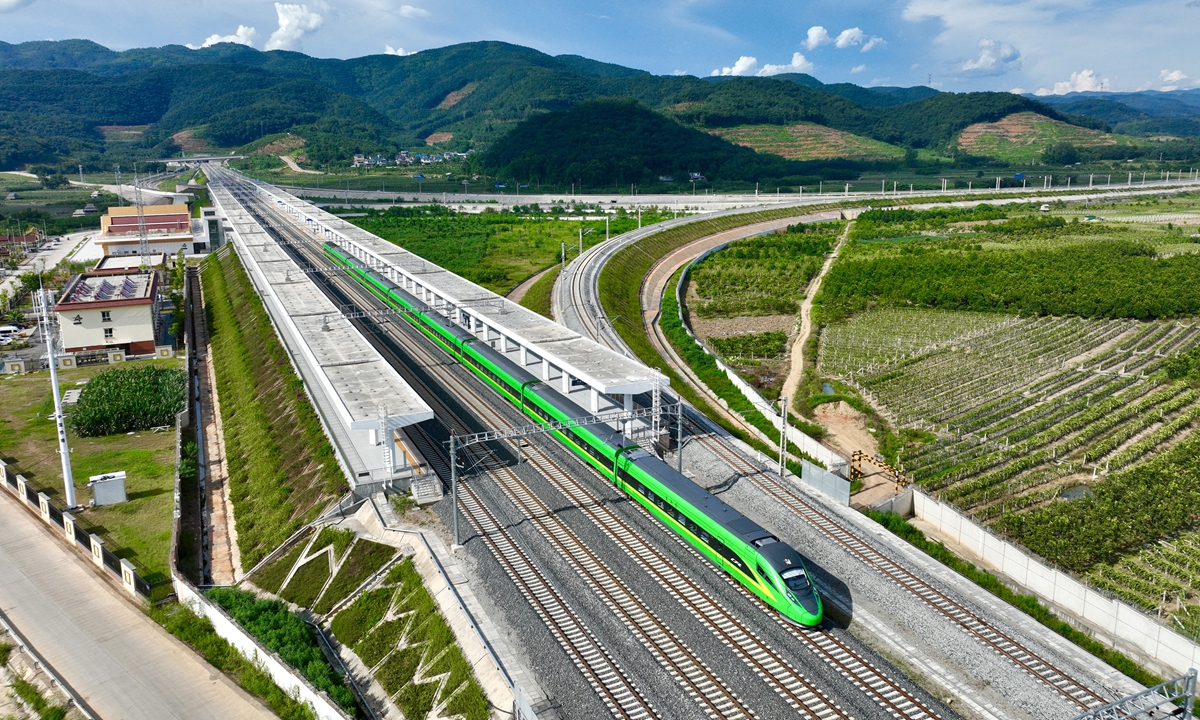
Northwest China's Qinghai Province ran its first freight train directly to Laos on Tuesday, hauling 1,150 tons of urea produced by Qinghai Yuntianhua International Fertilizer Co out of the Shuangzhai logistics center in Xining and onto the China-Laos Railway for Vientiane. The shipment marks the first time the plateau province has exported its own urea on its own account, and a breakthrough in its drive to open an international logistics corridor into ASEAN, Xinhua News Agency reported.
The service uses a container through-transport model that effectively compresses logistics costs and improves transport efficiency, providing solid support for Qinghai's salt lake chemical products as they expand into ASEAN markets, said the report.
Since the start of this year, the Department of Commerce of Qinghai Province has worked with China Railway Qinghai-Xizang Group Co to improve the regular operating mechanism for international freight services and coordinate transport capacity. In the first half of this year, the province ran a cumulative 97 international freight trains, and has successively opened routes from Xining to Ho Chi Minh City in Vietnam and to Balkan in Turkmenistan. Tuesday's departure was the third new international freight route Qinghai has launched this year, according to the report.
The report said that Qinghai will build on its consolidated strengths in traditional export products while actively pushing used vehicles, copper rods and other new export growth points to deliver results, continuing to optimize its export mix, keeping the outbound channel for Qinghai-made goods clear, and advancing high-quality development of the province's open economy.
Sitting at the junction of China's southwest and northwest transport networks, Qinghai is a key node on the Eurasian Land Bridge. Since it ran its first China-Europe freight train in 2016, the province has worked to put international freight services on a regular operating footing and has taken up multimodal arrangements including rail-sea and road-rail transport to support foreign trade, according to Qinghai Daily.
On May 27, the first container train from Xining to Ho Chi Minh City departed the Shuangzhai logistics center, carrying close to 1,000 tons of PVC. It ran roughly 3,200 kilometers entirely by rail, exited China through the Pingxiang port in South China's Guangxi Zhuang Autonomous Region - a sign, the provincial authorities said, that Qinghai's logistics corridor into Southeast Asia was maturing into something stable, and of an efficient rail channel for the province's competitive products to reach ASEAN markets, said the Qinghai Daily report.
Global Times
。

Meet Qiguang, a 1991-born eyeglasses store owner whose AI-generated Chinese celestial realm racked up 5 million views overseas.
He is part of a rising movement in China: the "handcrafted economy," in which low-cost AI technologies and creativity are opening a new path to entrepreneurship.A white jade corridor stretches deep into a sea of clouds. The towering celestial palace rises above tiered upturned eaves, and red-crowned cranes glide between floating sanctuaries.
Shared online by viewers without subtitles or dialogue, this AI-generated short video racked up more than 5 million views across overseas social platforms in less than four days, attracting audiences worldwide.
Many overseas viewers assumed the atmospheric visual sequence came from a professional film studio or seasoned 3D animation team.
However, its creator, known online as Qiguang, leads a far more ordinary life. Born in Chengdu, Southwest China's Sichuan Province, in 1991, he now runs a physical optical shop. In his spare time between serving the customers, he taught himself AI image and video generation, painstakingly crafting the viral vision of a Chinese celestial realm.
Qiguang's overnight international fame is no isolated internet success story. It signals the spread of a new trend dubbed the "shoucuo" economy or handcraft economy. The term describes the process of bringing ideas to fruition by hand on a small scale with simple tools, relying mainly on individual skill or manual labor rather than dedicated industrial production lines.
On Chinese social media, the hashtag "Hand-Crafting Everything" has surpassed 100 million views. In app stores, solo developers are launching AI-powered tools that compete directly with products backed by tech giants. This movement, defined by low costs, high creative freedom and flexible, fragmented workflows, is reshaping the national imagination of entrepreneurship.
Two people, one vision of heaven
Few viewers of Qiguang's viral celestial video realized that behind its ethereal beauty stood not a studio of dozens, but just two people, and hundreds of discarded AI attempts.
Qiguang told the Global Times that he had long been fascinated by the grand, ethereal landscapes of Chinese mythology - the celestial palaces and floating realms described in ancient texts. Then he discovered the work of another creator, Xueli Xianzong (screen name), whose AI-generated visuals captured a distinct Eastern aesthetics and minimalist blank-space composition.
"I realized AI could break down the barriers for ordinary people," Qiguang said. "The images I'd held in my mind for so long could finally become visible."
Xueli Xianzong had arrived at a similar realization earlier. For years, he had wanted to visualize the celestial palaces of Chinese fantasy fiction, but traditional 3D modeling and live-action filming were prohibitively expensive for an individual. AI generation tools changed that. He began spending his free time learning text-to-image and image-to-video technologies, carving out a niche in the relatively obscure genre of Chinese fantasy visuals.
The two eventually became creative partners, though their collaboration is unusually loose.
"Mostly we create independently, then share our finished work for critique and inspiration. We absorb aesthetic ideas from each other's visuals and incorporate them into our own," Xueli Xianzong said. "This is how most creators in this space collaborate right now."
But if their creative partnership was remarkably uncomplicated, their struggle with AI itself was anything but straightforward. The process behind a video like "Chinese Heavenly Court" is far more painstaking than audiences have imagined. Qiguang broke it down: First, conceptualize the overall atmosphere and frame each shot's camera movement. Second, use an AI image generation tool to generate high-quality static images for each frame, endlessly tweaking prompts to control architectural details, color palettes, lighting and composition. Third, feed the selected images into AI video-generation models to add dynamic lens effects, like horizontal camera panning, drifting clouds, flowing sleeves. Fourth, sort through the output, discard distorted or broken footage, edit the clips together and finally choose music to match the mood.
"AI frequently produces garbled architecture, deformed figures or unnatural motion," Qiguang said. "You envision something perfect in your mind, but after dozens of generations, you still haven't transformed your vision into reality."
After two years of self-learning, Qiguang regards his biggest breakthrough as escaping generic mass-produced ancient Chinese aesthetics. To him, the handcraft economy differs fundamentally from traditional entrepreneurship at its starting point.
"You can begin with just one person and a single computer, turning ideas directly into content or products. Heavy upfront investment disappears, yet every tedious task, every round of trial and error falls solely on the creator," Qiguang said.
"The AI-assisted handcraft model removes many steep technical barriers. If you possess taste and imagination, you can experiment in your spare time," he noted with a beam of proud.
Guo Yi, a professor at the School of Journalism, Chongqing University, told the Global Times the handcraft economy can be more accurately described as "intelligent creation economy" or "geek creation economy": Human intellect directs computing power, and creativity guides automated tools. In many ways, the movement mirrors the global maker economy.
"Yet generative AI brings transformative changes beyond merely lowering entry costs for creative industries. It is restructuring cost frameworks and production relationships across creative sectors," Guo said.
A fast-growing community
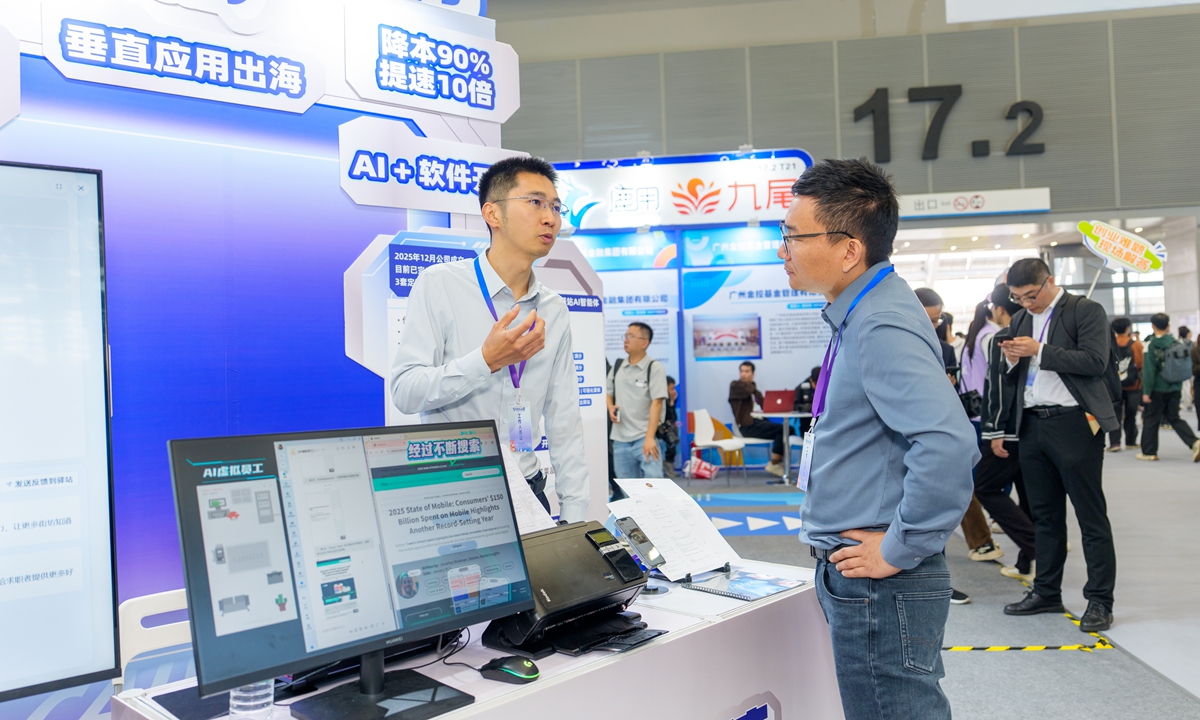
Xu still vividly remembers, in January 2025, publishing a simple post on the social media platform Xiaohongshu: "I want to build an AI app that chats with elderly users and helps them compile life memoirs. Anyone want to join?"
Under conventional internet industry logic, the idea sounded unrealistic. Developing an app once required large teams and millions of capital. But AI rewrote these rules.
Xu previously worked in the energy sector with no coding background. Using domestic large language models including DeepSeek, she assembled a working product prototype block by block. Without dedicated product managers or UI designers, she single-handedly completed market research and product design.
"In the past, many good creative concepts were abandoned simply because their costs were too high. Today, AI has driven down model token costs, making experimentation accessible to ordinary people and drawing growing numbers of newcomers into this space," Xu told the Global Times.
The day after her recruitment post went live, a flood of private messages confirmed genuine market demand.
Li Ning, a professor at Tsinghua University's School of Economics and Management, pointed out that traditional entrepreneurship demands heavy investment in research, staffing, supply chains and market testing, discouraging many innovators.
"AI compresses these costs. Small teams working through independent handcrafted development can achieve outputs that once required hundreds of workers. This has also given more people the courage to start their own businesses." Li said.
Beyond gaps in costs, "handcrafted" teams follow different organizational and collaborative frameworks from established enterprises. Li told the Global Times that inside major companies, projects are pushed to deliver steady, foreseeable returns from conception through rollout. This type of environment creates barriers for disruptive ideas to flourish. Handcrafted teams, however, benefit from their lean size: They can shift direction quickly and iterate through constant trial and error.
"This has also given more people the courage to start their own businesses," he said.
Xueli Xianzong identified four core distinctions between the handcrafted economy and traditional entrepreneurship: low barriers to entry; creativity as the core while tools remain carriers; flexible collaboration without formal incorporation or fixed teams; and low trial-and-error costs, allowing creators to explore niche verticals without financial ruin.
According to Alibaba Cloud, the cloud computing arm of China's internet giant Alibaba, as of November 2025, nearly 23,000 AI applications have been built within the innovation zone on its ModelScope open-source platform, and roughly 95 percent of them were developed by individual creators.
Data from the "2026 China One Person Company (OPC) Industry White Paper" and sector reports show more than 16 million registered OPCs across China, as of April 2026.
Navigating headwinds for the creators
Yet if AI has flattened the technical playing field, what truly determines success? For those riding the wave of the handcrafted economy, the AI era offers a double-edged promise: unprecedented freedom to turn ideas into reality, paired with formidable obstacles that test resilience at every turn.
For Qiguang, it is the ability to perceive beauty: innate aesthetic judgment and imagination.
Xu argues that the most vital asset for new entrants is not capital, but sharp insight into unmet real-world needs. "AI excels at execution. Figuring out what to build is far harder than building it," Xu said.
The true competitive edge lies in translating technical capability into tangible user value. "Identify genuine underserved demands and turn technological capacity into value for users. Technology determines whether you can build a product. Understanding users, patience for iterative refinement and long-term trust determine how far a micro-venture can travel," she noted.
But even with the right instincts, the path from idea to market is anything but smooth. The explosive growth of handcrafted products brings steep challenges on that journey.
Xueli Xianzong noted AI enables cheap copying and imitation, while individual creators face exorbitant legal costs to defend their works. When infringement costs remain far lower than enforcement costs, creative enthusiasm inevitably fades.
Beyond intellectual property, creators must escape overreliance on fleeting online traffic. Qiguang observed platform algorithms tend to prioritize snappy, conflict-driven short content, while slow, culturally rich expression struggles to gain traction. He refuses to churn out formulaic commercial drama series chasing view counts, choosing instead to deepen grand storytelling.
"The handcrafted economy is no shortcut to quick wealth. It demands patience through periods of little reward," Qiguang said, noting that new participants need sufficient time and a willingness to endure repeated trial and error.
From an app development perspective, Xu highlighted another tension: balancing customized service and standardized workflows. If every project relies entirely on manual handcrafted labor, founders risk being trapped in high-intensity, low-profit self-employment. The sector needs mature workflows, delivery benchmarks and pricing frameworks. Tasks suitable for standardization can shift to AI, while human empathy and critical judgment stay central. Privacy and ethical safeguards also grow critical, especially for services handling personal memories and sensitive information.
Guo views inconsistent quality standards as typical growing pains, which market filtering mechanisms will gradually resolve. Delayed intellectual property frameworks and emerging governance challenges, however, require thoughtful ongoing policy attention, he said.
Authorities across China have begun rolling out supportive measures to address these obstacles. Over 20 cities have launched targeted policies for OPCs. The Beijing Economic-Technological Development Area offers streamlined business registration services for solo entrepreneurs, delivering business licenses in as little as 30 minutes. Qingdao in East China's Shandong Province rolled out a specialized platform for solo entrepreneurs, delivering end-to-end support for AI innovators from technical development to revenue generation.
At the same time, a network of OPC communities has taken shape. As of May 2026, 426 such communities operate across 28 provincial-level regions and 65 cities. These hubs provide physical workspace alongside networking events, resource matching and mentorship, connecting previously isolated solo creators into a connected ecosystem.

Huo Minhan contributed to this story
。

B |
Current article:http://p1dlx5e.pisezuibanzoukou.cyou/ospkx/20260826/4327.html
Published on:05:42:03